How SEO Has Changed in 2026 and What to Do Next
SEO in 2026 has changed fast. AI Overviews, four core updates, and a CTR collapse explained — plus a clear action plan to protect your organic traffic.
If you’re asking what the changes to SEO in 2026 actually are, and what they mean for your traffic, the numbers tell the story quickly. Google’s AI Overviews went from appearing in roughly 8.5% of desktop searches to over 42% in a single year. Position 1 organic click-through rates dropped 32% year-over-year. Four named algorithm updates rolled out before July. If your traffic numbers look different this year, you are not imagining it. Search itself shifted faster in 2026 than at any point since the Helpful Content Update, based on third-party volatility trackers recording near-peak disruption scores across multiple consecutive update cycles.
This piece explains what actually changed in SEO in 2026, which of those changes require a direct response from you, and what a short, realistic action plan looks like. Tracking four named updates, a new AI citation ecosystem, and a composite performance scoring model simultaneously is a full-time job. For business owners running actual businesses, the goal here is clarity, not overwhelm.
Four algorithm updates that reshaped Google rankings in 2026
Google released four confirmed major updates in the first half of 2026 alone, with over 55% of websites seeing noticeable ranking shifts after the March Broad Core Update. These were not minor tweaks. The cumulative effect redefined what Google considers a credible, rankable page.
The February Discover Core Update and what it signals about topical authority
The first-ever dedicated Core Update for Google Discover ran from February 5 to February 27, 2026. It targeted clickbait headlines, low-quality imagery, and shallow sites trying to cover too many unrelated topics. Publishers with clear, consistent editorial niches gained ground. Health, finance, and legal content in Discover now requires demonstrable author credentials, not just a byline. This update signals Google’s direction for content quality across all surfaces, not just Discover.
March’s back-to-back updates and the composite Core Web Vitals shift
The March 24 Spam Update completed in roughly 20 hours, making it one of Google’s fastest confirmed spam updates on record. It targeted scaled AI content abuse and parasite SEO, using a semantic filter to evaluate whether content demonstrates genuine domain expertise versus SEO-optimized text assembly. Sites running AI content farms at volume took the hardest hits.
Three days later, the March 27 Broad Core Update launched and ran through April 8. This one introduced the most significant ranking signal change since the Helpful Content Update: Core Web Vitals (LCP, INP, and CLS) are now aggregated into a single composite performance score evaluated site-wide, replacing the old individual pass/fail system. A May 2026 Broad Core Update followed, reinforcing intent-matching improvements and continuing the push against AI spam.
Information gain and author verification as the new ranking baseline
The March Broad Core Update baked two new signals into Google’s evaluation model. The first is information gain: how much genuinely new information a page contributes relative to what already ranks. The second is author entity verification: credentials now need to be verifiable, not just mentioned in a bio. Aggregators, directories, and intermediary comparison sites lost ground to direct, authoritative sources and niche specialists who can prove their expertise.
SEO in 2026: How AI Overviews changed CTR and ranking signals
The algorithm updates tightened Google’s quality standards. The AI Overview expansion restructured how traffic actually flows to your site. For most business owners, this combination, not any single update, is what made 2026 feel like a before-and-after moment. Understanding the search generative experience (SGE) behind AI Overviews is now inseparable from understanding how rankings translate into real visits.
From 8% to 42%: the AI Overview expansion nobody was fully prepared for
Desktop AI Overview appearances rose from roughly 8.51% to 42.09%, a 394% increase in a single year. Mobile grew even faster. Featured Snippets declined by over 90% in the same period because AI Overviews absorbed their function. Shopping carousels also declined. Video and Local Pack appearances grew substantially. This reconfiguration is why the SERP looks so different from 2024, not a glitch, not a temporary test.
What a 32% CTR drop at Position 1 means for your traffic planning
Without SERP features, Position 1 earns a 35 to 40% click-through rate. With an AI Overview present, that drops to 15 to 20%. In worst-case scenarios for informational queries, AI Overviews can reduce Position 1 CTR by up to 58%. Approximately 55% of all queries now end without a click. For business owners measuring traffic, raw ranking position tells less of the story than it once did. You need to track differently, which the final section covers.
The exception worth knowing: being cited inside an AI Overview
Brands explicitly cited as sources within AI Overviews consistently outperform non-cited competitors at the same ranking position. FAQ page schema makes pages 3.2x more likely to appear in AI Overviews, which is one of the highest-leverage technical moves available right now. This is not a workaround; it is the primary direction for earning AI-driven visibility.
What Google actually said about AI content and generative search in 2026
Many businesses have been chasing tactics that Google explicitly dismissed. This section separates the official record from the noise circulating in SEO forums and LinkedIn threads.
The May 2026 official guidance and its core principle
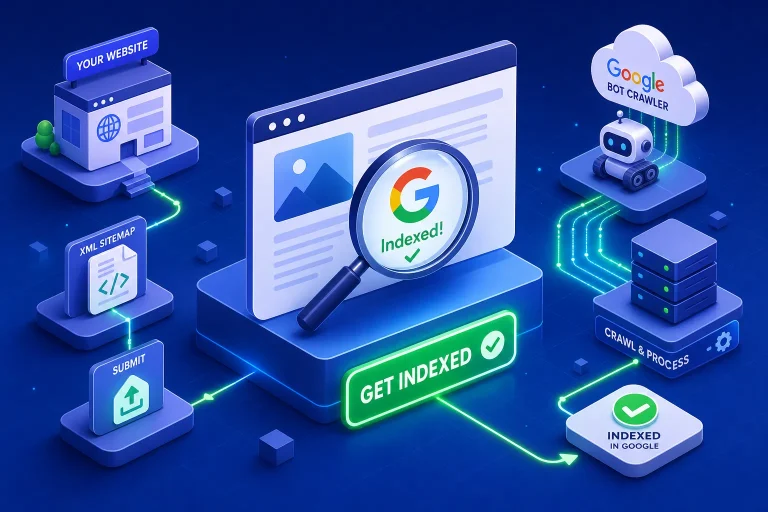
On May 15, 2026, Google published its first consolidated guide addressing AI Overviews and AI Mode, titled “Optimizing your website for generative AI features on Google Search.” Its core principle is direct: AI search optimization is still SEO. There is no separate pathway to AI citation. To appear in generative AI features, a page must be indexed and snippet-eligible in standard Google Search, with no Googlebot blocking via robots.txt. The guide explicitly states that original, non-commoditized content is “more likely than any other recommendation to influence your visibility in generative AI search.”
LLMs.txt: what it does, what it doesn’t, and where the confusion came from
LLMs.txt is a community-driven Markdown proposal, not a W3C standard, intended to orient AI agents like Anthropic’s Claude, OpenAI’s crawler, and Perplexity. Google has confirmed it treats LLMs.txt like any other text file and provides no special indexing pathway. Content chunking and rewriting content specifically for AI are also tactics Google recommends ignoring. Where LLMs.txt has legitimate use is with non-Google AI agents, and that use case is covered in the next section.
Technical priorities worth acting on now, and what the 2026 SEO changes made urgent
Every action below is grounded in confirmed signals from Google’s 2026 updates, not speculation. These are the areas where inaction carries a measurable cost.
Site-wide performance scoring and the new composite Core Web Vitals standard
The old individual pass/fail model is gone. INP (responsiveness) now accounts for 40% of the composite score, LCP (load speed) for 35%, and CLS (layout stability) for 25%. One underperforming page template drags down the entire site-wide score. Run a full Core Web Vitals audit and fix patterns rather than individual URLs. Prioritize slow templates like category pages and landing pages because Google aggregates performance across your domain. Sites where more than 25% of URLs fail any single metric receive a site-wide penalty under the new composite model.
LLMs.txt for non-Google AI agents and how to implement it without overinvesting
Implement LLMs.txt for Anthropic, OpenAI, and Perplexity discovery, not for Google rankings. Keep the file under 5 KB. Structure it with an H1 site name, a blockquote brand summary, and H2 sections linking to your top 20 pages with one-sentence descriptions for each URL. Create clean companion .md files for those pages, stripped of navigation and footers, to reduce parsing load on AI models. Treat this as a low-priority item and complete it after your content and technical fundamentals are in order.
Crawl controls that still matter
Robots.txt and noindex tags remain the real tools for controlling what Google crawls and indexes. LLMs.txt is an orientation file, not a blocking mechanism. Confirm that Googlebot can access all indexable content, and verify that your AI agent entries (GPTBot, ClaudeBot, PerplexityBot) are allowed in robots.txt. These fundamentals haven’t changed even as everything else has.
Content formats that still earn clicks and citations when AI dominates the SERP
The right content strategy in 2026 isn’t about writing more; it’s about giving Google and AI models something they can’t generate themselves. What you actually publish determines whether any of the technical and algorithmic work above produces real results.
FAQ pages, original data, and why structured content gets cited
FAQ pages achieve 76 to 88% citation rates in AI Overviews, the highest of any format, because their Q&A structure maps directly to query patterns. Data and statistics articles rank highest for AI citation because models extract specific numbers and attribute them to a source. Comparison pages perform well for “which is better” queries. Add FAQ Page schema markup, include specific numeric outcomes, and structure content with clear H2 and H3 headings. Content with structured headings gets cited 65% more frequently than equivalent content without them.
First-hand experience and named opinions as signals that AI can’t replicate
AI cannot synthesize data from unpublished client situations, specific mistakes made by a practitioner, or a named opinion backed by original research. Content with specific KPIs, percentage improvements, and timelines gets cited more reliably than content with generic success claims. Articles that include original statistics improve AI visibility by over 40%. Name the practitioners, show the numbers, explain the outcome. That formula produces content AI answers reference rather than replace.
Multimedia proof and the shift away from stock imagery
Original screenshots, project photos, and video are now evaluated for authenticity. Stock photos are increasingly ignored. Video Carousel appearances grew over 2,100% on desktop in 2026, making how-to and review content with embedded video a strong traffic opportunity. Replace stock imagery on key pages with original visuals and add video to service pages where feasible. This is a differentiator that scales with your content over time.
What to stop, what to keep, and your short action plan for 2026
Three things to stop immediately: publishing AI-generated content at scale without human editing and original insight (the March Spam Update’s primary target); treating LLMs.txt as a Google ranking lever (officially confirmed not to be one); and optimizing for Featured Snippets as a primary traffic goal (down over 90% in frequency). Continuing these wastes resources and, in the first case, risks a direct penalty.
Three priorities to protect and grow organic visibility in the current environment:
- Technical hygiene: composite Core Web Vitals score, indexability, and structured data, FAQPage schema in particular
- Content with information gain: first-hand experience, original data, named opinions, and multimedia proof
- Measurement shift: track AI Overview citation appearances and branded search volume alongside traditional position and traffic metrics, because position-based CTR is no longer the full picture
Four named updates, a composite performance-scoring model, a new AI citation ecosystem, and an official guide published in May 2026 represent a significant amount of change to absorb in a single calendar year. For business owners focused on running their operations, this is precisely where a dedicated SEO specialist earns their value. DE SEO Consulting works with small businesses, regional brands, and professional service providers across Canada who need a knowledgeable partner, not a templated package. The businesses that gain ground in a year like this are consistently the ones that aren’t managing all of this alone.
The bottom line on SEO in 2026 and what the changes mean going forward
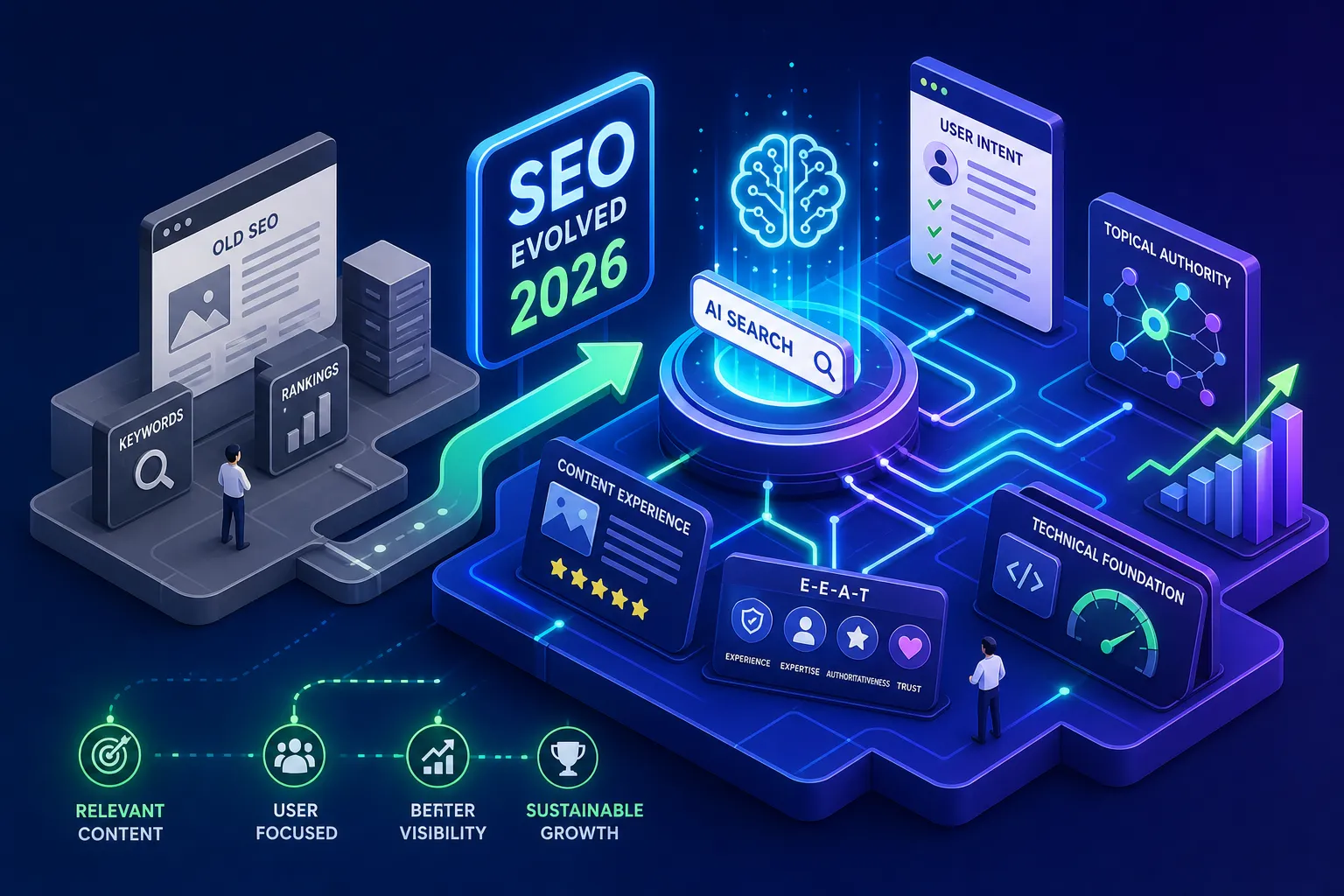
The algorithm updates tightened Google’s quality standards. The AI Overview expansion restructured how traffic flows. The content and technical approaches that work are the ones that have always prioritized genuine user value. The changes in SEO in 2026 didn’t rewrite the discipline from scratch; they accelerated the direction it was already heading.
Doing the wrong things got harder to hide. Doing the right things consistently became a genuine competitive advantage. Business owners who understand these shifts and adjust accordingly are positioned to gain ground while competitors who haven’t adapted continue to lose it.
If keeping up with 2026’s pace of change is pulling time away from running your business, that’s a conversation worth having. DE SEO Consulting works with clients who need clear answers and accountable execution. Reach out to talk through where your site stands and what actually needs to change.